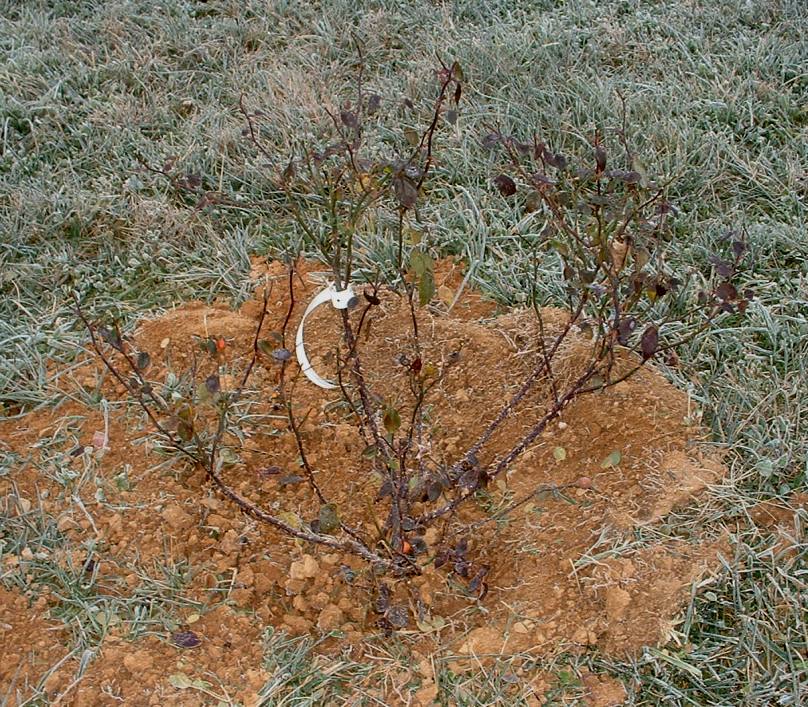
Check out how lush and healthy Rosa laevigata is currently. I'm hoping this means I'll get some flowers in the Spring so I can try (yet again) to get some crosses from it. It's such a cool species!
... growing and hybridizing all kinds of plants in zone 6b Maryland since the 1980's.
Saturday, November 17, 2012
Some roses
Here's how one of the transplanted suckers of Rosa rugosa x xanthina is looking right now. [the name is a link to an older post with more details] Notice the missing end of the shoot and ends of the leaves. That's the handiwork of the resident deer herd. Doesn't seem to matter to them that it's right up near the house either.
Here's the super-healthy foliage (although a little nipped by frost) of one of my favorite seedlings I've raised - Rosa multiflora x rugosa. Actually this is a rooted cutting, which I started because I was afraid I might lose this mother plant when I had to move it back in the Spring. It'll be good to have a duplicate now for safety sake anyway.
Check out how lush and healthy Rosa laevigata is currently. I'm hoping this means I'll get some flowers in the Spring so I can try (yet again) to get some crosses from it. It's such a cool species!
Cricket Song still going
Well, the other clump was a little late getting started for its rebloom season because it was a little overshadowed by neighboring plants... but it's kind of nice because it's picking up where the other clump is leaving off.
First Pomegranate Seedling
Last Fall we tried planting the seeds directly in the ground - I was hoping they'd come up in the Spring but we got no seedlings at all. Already, indoors is working much better. Here's the first of what I hope will be a whole batch of 'Russian' pomegranate seedlings. It would be fun to see what kind of variation in cold-hardiness and fruit quality they'd have.
Wednesday, November 14, 2012
Deer [pretty but pretty destructive too]
First picture shows two of the lesser bucks that have been hanging around. The second and third pictures are of the bigger buck that has staked out his claim to the area. Fourth picture shows what's left of the 'Winner's Circle' rose I'd just planted out Monday evening. It had been full of orange hips and densely-foliaged. Good thing it had thorns or there might not be anything left LOL
The last picture shows the recent gouge marks one of those bucks has put into the bark of our Yoshino cherry. I'd thought that it had grown big enough to not be a good scraping tree anymore - they seem to prefer broom handle diameter stuff around here. I put my foot in the picture to show how big the trunk is. The right hand part of the picture is of the back side of that same tree trunk showing old scars from when the tree was much younger. I'd wrapped it for a few years after that first incident, but the last couple of years they've seemed to leave it alone.
Monday, November 12, 2012
Fall Radish Breeding Report
Well, the Fall radishes did so much better this year by getting them into the ground a little earlier (I think it was August 29th). We planted a long row of seeds that we'd saved from 'Long Black Spanish' and a short row that we'd saved from 'Roseheart'. After thinning and selectively favoring any purple foliaged types, the LBS row ended up being about 50:50 split between normal LBS and F1 hybrids from 'Roseheart' intercrosses. All but one of the 'Roseheart' row were F1 hybrids.
The first picture shows how lush they'd grown. They had just been nipped by the frost a little.
We decided to try some "French" style - sliced and sprinkled with salt, on top of buttered bread. It really does cancel out some of the heat - pretty tasty this way!
The first picture shows how lush they'd grown. They had just been nipped by the frost a little.
The second picture shows two LBS (top left) and the lone 'Roseheart' (top right), below them are five F1 hybrids between these two varieties.
The third picture (below) shows the variation in shape and size among the F1s. They're on a large pizza box to give you an idea what size they are.
The nest two pictures below show Roseheart (left), LBS (right) and F1 between them.
We decided to try some "French" style - sliced and sprinkled with salt, on top of buttered bread. It really does cancel out some of the heat - pretty tasty this way!
Sunday, November 11, 2012
Pomegranate response to cooler weather
'Russian' pomegranate (on the left) turned pretty
Fall yellow a few weeks ago and has dropped all its foliage already now. In contrast, 'Nana' (on
right) is still quite green and doesn't seem to realize that really
cold weather is coming. That could be the reason why its frozen to the ground
every year here while 'Russian' seems to be doing just fine. 'Russian' only had a little freeze damage the first year in the ground and has even fruited for two years now.
F1 Hybrid and 'Long Black Spanish' radish
These two radishes were both grown from seed off of the 'Long
Black Spanish' radishes that I overwintered in a ziplock in the fridge last
winter. The one on the left HAS to be from an intercross with the couple of 'Roseheart'
(green-skinned, pink-fleshed). Since it's supposed to be so nice out today,
we're planning to dig all the rest. I'll be sure to get some more pictures
showing both parent types and the hybrids. There should be quite a few hybrids because when I thinned the row, I tried to save as many of the purple-foliaged ones as I could - see the purple leaf stalk on the hybrid vs. the totally green leaf stalks of the normal 'Long Black Spanish'.
Subscribe to:
Posts (Atom)