... growing and hybridizing all kinds of plants in zone 6b Maryland since the 1980's.
Sunday, August 3, 2014
Rosa palustris X fedtschenkoana
Here's a good picture of the upper foliage of the F1 Rosa palustris X fedtschenkoana
But to be fair, the bottom foliage is showing some kind of spotting issues and dropping off.
Iris foliage health 2
Didn't take many pictures of the sickest looking ones but here are some that look promising as a starting point in breeding for better health...
Iris aphylla 'Transylvania Native' looks a lot healthier than the other clones of Iris aphylla I've grown. Here's a clump pf it at my in-law's house.
My reblooming MTB, 'Cricket Song', is pretty healthy.
The old pallida type 'Floridor' is healthier than the average.
My "Pink Volunteer" is still looking decent in mid-summer.
This clone of Iris variegata is always looking pretty ratty by mid-summer - so it wouldn't be one I'd want to use in a foliage health breeding program.
Iris aphylla 'Transylvania Native' looks a lot healthier than the other clones of Iris aphylla I've grown. Here's a clump pf it at my in-law's house.
The old pallida type 'Floridor' is healthier than the average.
My "Pink Volunteer" is still looking decent in mid-summer.
The iris that started me thinking about foliage health in the first place was this seedling ('Rosalie Figge' X aphylla 'Wine Red'). It's always looking relatively clean while everything around it is covered with leaf spot.
This clone of Iris variegata is always looking pretty ratty by mid-summer - so it wouldn't be one I'd want to use in a foliage health breeding program.
This one I'm currently calling by a garden name ("YRFT") is another one that is only average in the foliage health department. But it's a super-vigorous grower and has excellent branching, so I've crossed it with Floridor to try to get the best of both parents combined into one line.
Wednesday, July 23, 2014
Iris foliage health
I've been calling this self-sown seedling "Pink Volunteer" and hadn't planned on registering it but I may have to reconsider. In addition to the Spring bloom it has also bloomed each Fall for 3 or 4 years now. This year it sent up a summer stalk and I've been noticing how crazy-healthy the foliage has remained when other irises are spotting and browning at the tips. I know that a lot of people seem to only care about the flowers but I think the foliage is reason enough to include an iris in the landscape (when it's healthy foliage that is).
Rosa palustris X fedtschenkoana
No blooms this year but I'm hopeful about next year. This is F1 Rosa palustris X fedtschenkoana. And I don't have any doubt that it's an actual hybrid because the blue-gray foliage takes strongly after papa.
Hibiscus seedling
Not really all that spectacular but not too shabby... this is a seedling from Hibiscus 'Moy Grande' crossed with 'Old Yella'. This is it's maiden bloom and it's in poor soil, so it might perform even better with a little care. It seems to have gotten the size from 'Moy Grande' and the better petal width from 'Old Yella'. I did the cross hoping to see some seedlings with yellow pollen like 'Moy Grande' but so far the two that have bloomed have both had typical pale ivory colored pollen that most of the hardy Hibiscus have.
Wednesday, June 25, 2014
Goumi Harvest
The "Scarlet Sweet" goumi is really producing! It's only just a few years old and is loaded with fruit.
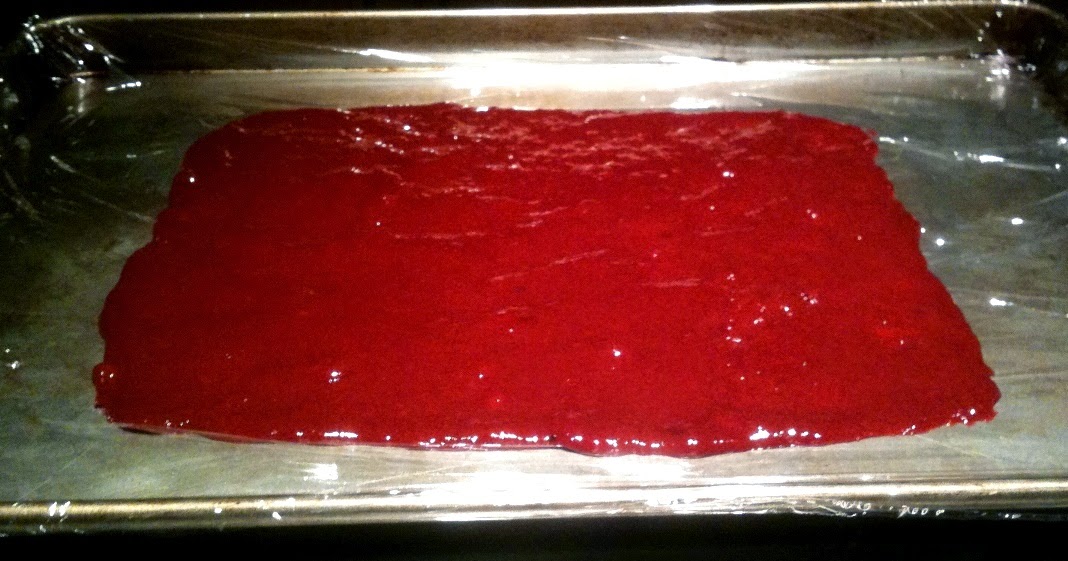
Decided to make fruit leather out of them since they're a little tart. So, I ran them through a Foley food mill to separate out the skins and seeds. Then put the pulp and juice into a pot and started heating it. The pulp sort of coagulates into a red "curd" which I skimmed out into a bowl and added it back in once the clear juice had boiled down into a syrup. I added a couple tablespoons of sugar and spread the bright red, thick sauce on a plastic wrap covered baking sheet to finish drying. Pretty close in taste to a Fruit Roll Up.
We picked all these and there are probably twice that many still on the bush.
Wednesday, June 11, 2014
Poppies, wild and cultivated
Side-by-side comparison of the flowers of a perennial cultivated Oriental Poppy (Papaver orientale) with a much smaller weedy annual relative, the Long Pod Poppy (Papaver dubium). I always leave a few of the weedy one to reseed because it's such a pretty weed that I don't mind a few here and there.
I know these two should NOT intercross but just for fun I slathered a bunch of the black pollen from the Oriental Poppy onto the stigmas of the Long Pod Poppy. I'll plant those seeds somewhere I can see if anything weird pops up.
Subscribe to:
Posts (Atom)